
Honkai: Star Rail's Fate Collab Aims to Redeem HoYoverse's Troubled Crossover History
The Honkai: Star Rail and Fate/stay night collaboration is a pivotal opportunity to rectify past missteps by delivering powerful, integrated playable characters and compelling narrative synergy.
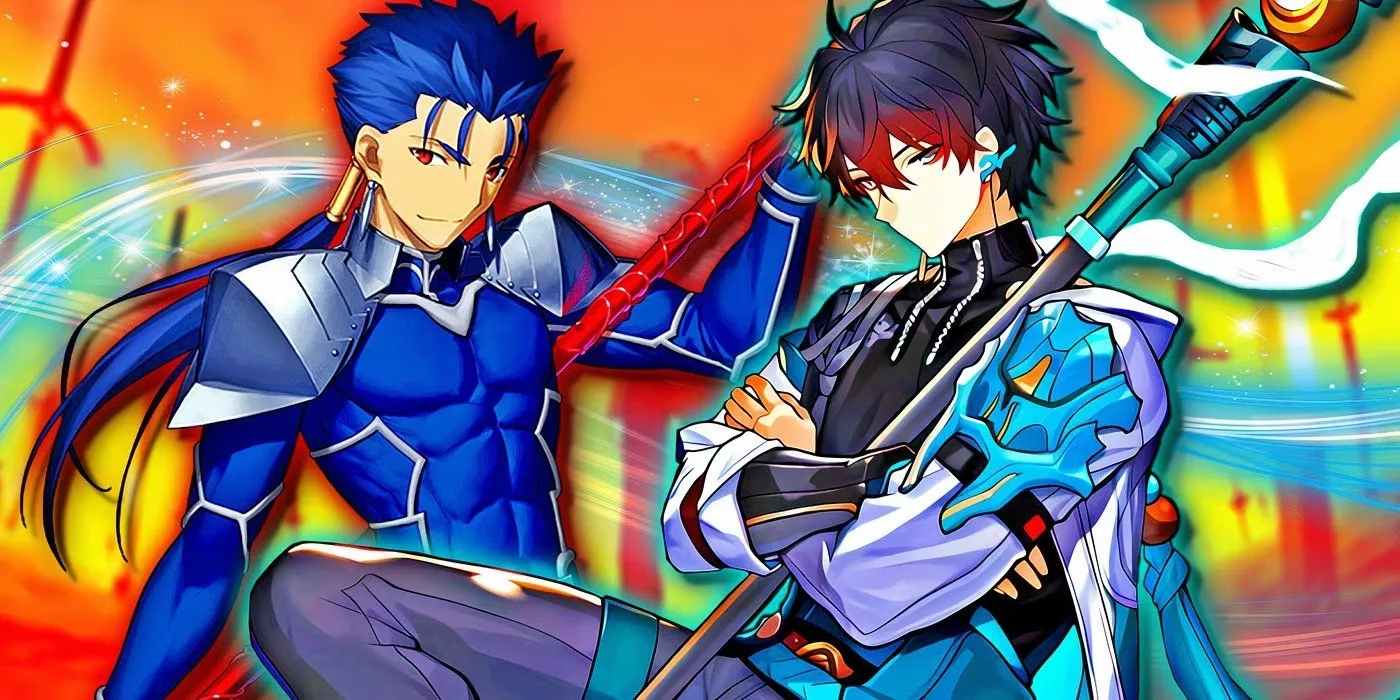
A new chapter in HoYoverse's crossover strategy is on the horizon as Honkai: Star Rail prepares for its highly anticipated collaboration with the legendary anime series Fate/stay night: Unlimited Blade Works. The announcement, which served as the grand finale of the game's Version 2.4 livestream, has sent waves of excitement and cautious optimism through the player community. Slated for launch in the third quarter of 2025, this partnership represents more than just another in-game event; it is a pivotal opportunity for the developer to rectify a past misstep and redefine what meaningful collaboration content can be. While the livestream detailed a wealth of upcoming content for Version 2.4—including a return to the Xianzhou Luofu, new character kits for Yunli and Jiaoqiu, and the highly awaited Hunt path for March 7th—the Fate collaboration has undeniably stolen the spotlight, promising a potential paradigm shift for HoYoverse's approach to crossovers.
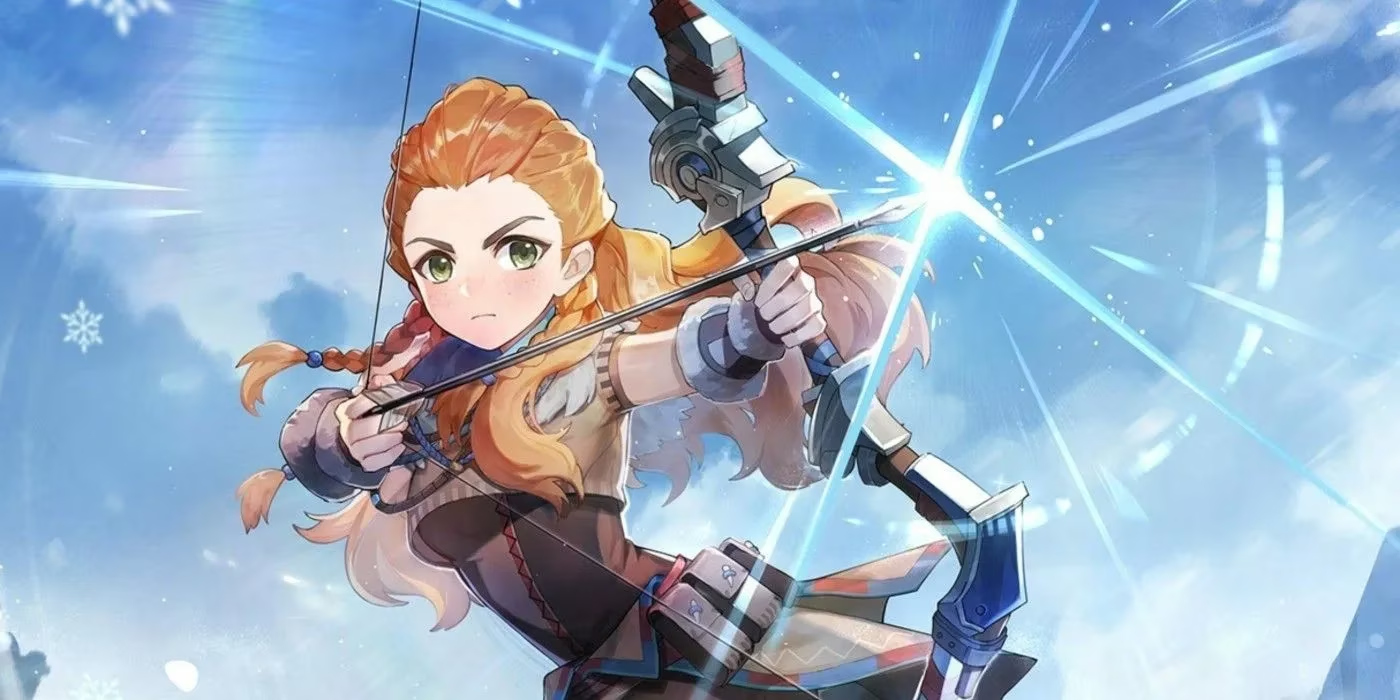
The shadow of HoYoverse's previous major collaboration looms large over this new venture. The company's first foray into high-profile crossovers was with Genshin Impact and PlayStation's Horizon series, introducing Aloy from Horizon Forbidden West as a playable character. This collaboration, intended to promote the console game's release, quickly became a case study in how not to execute a crossover. The initiative was plagued by issues from the start, including the delayed release of Horizon Forbidden West, which disrupted the promotional synergy. More critically, Aloy's implementation in Genshin Impact was met with widespread player disappointment. Her gameplay kit was widely criticized as underwhelming and lacked synergy with the existing roster. Furthermore, her initial availability was restricted solely to PlayStation players, alienating a significant portion of the mobile and PC player base. The character was eventually added to all platforms but without any meaningful adjustments or narrative integration, leaving her as a forgotten relic of a poorly handled partnership.
This history sets a clear benchmark for what the Honkai: Star Rail and Fate collaboration must avoid and improve upon. Industry observers and players alike have outlined several key criteria for this collaboration to be considered a success and to restore faith in HoYoverse's crossover capabilities.
The Pillars of a Successful Collaboration
For the Fate/stay night collaboration to truly prosper, it must deliver on multiple fronts where its predecessor failed. The lessons from Aloy's introduction provide a clear roadmap.
1. Meaningful and Powerful Playable Characters:
The most critical failure of the Horizon collab was the release of a character that felt like an afterthought. For the Fate collaboration to succeed, any adapted characters—such as the iconic Saber, Archer, or Lancer—must be integrated as fully realized, top-tier units. This means:
-
Competitive Gameplay Kits: Characters must have unique and powerful abilities that offer clear value in various team compositions and end-game content like Memory of Chaos or Pure Fiction. A weak or gimmicky kit would be an instant failure.
-
Thoughtful Adaptation: Their skills and ultimate abilities should creatively reflect their Noble Phantasms and fighting styles from the anime, providing both fan service and functional gameplay depth.
-
Long-Term Viability: They should be designed with future game updates and meta shifts in mind, not released as one-time novelties.
2. Universal Accessibility Across All Platforms:
The platform exclusivity that marred Aloy's release must not be repeated. Honkai: Star Rail is available on Android, iOS, PC, and PS5. Any collaborative character or content must be accessible to all players on all platforms simultaneously. Creating a divided player experience would be a disastrous step backward and generate immense community backlash.
3. Integrated Narrative Justification:
Perhaps the most significant opportunity for improvement lies in storytelling. Dropping a character into the game with no explanation feels jarring and cheap. Honkai: Star Rail's lore, with its multiversal concepts like the Imaginary Tree and the Sea of Quanta, provides the perfect narrative framework to seamlessly integrate the Fate universe. A successful collaboration should feature:
-
A Dedicated Story Event: A temporary or permanent story arc that explains the convergence of worlds, perhaps triggered by a Stellaron anomaly or an Aeon's intervention.
-
Character Integration: The Astral Express crew interacting with the Fate heroes, creating memorable cross-over dialogues and scenarios that enrich the game's world.
-
Lasting Impact: While the event may be time-limited, its story implications or even the characters themselves could leave a permanent mark on the game's lore.
4. Freedom from External Release Schedules:
A fortunate circumstance for this collaboration is that it does not appear to be tethered to promoting a new, unreleased Fate anime or game that could be delayed. This removes a major point of failure from the Horizon collaboration, where external delays created confusion and disrupted planning. HoYoverse has the chance to execute this partnership on its own terms and timeline.
The Stakes and The Promise
As of 2026, the gaming community's expectations for live-service game collaborations have evolved. Players now expect high-quality, respectful integrations that add genuine value to the game they love. The Honkai: Star Rail and Fate/stay night collaboration sits at a crossroads. It carries the weight of HoYoverse's past mistake but also the immense potential of uniting two beloved universes.
The promise is tantalizing: imagine commanding Saber's Excalibur in a turn-based combat system, or strategically deploying Archer's Unlimited Blade Works as a powerful area-of-effect Ultimate. The rich lore of both properties offers endless possibilities for creative enemy design, event mechanics, and even new gameplay modes themed around the Holy Grail War.
For HoYoverse, this is more than just another content update. It is a reputation-redeeming mission. A successful, well-received collaboration would demonstrate that the developer has listened to player feedback, learned from its experiences, and is committed to delivering premium crossover content. It would set a new gold standard for future collaborations, not just within HoYoverse's own titles but potentially for the wider gaming industry.
Conversely, a repeat of past failures could severely damage player trust and cast a long shadow over any future collaborative efforts. The announcement has already set expectations high; the execution must now meet them. The player base watches with hopeful anticipation, eager to see if the Trailblaze will successfully intersect with the path of the Heroes of Fate, creating a collaboration that is, itself, legendary.
Comments